
This is testing summary
Investing.com reports that the majority of Asian stocks jumped slightly on Wednesday, with Australian shares leading the gains due to earnings-driven increases, while investors identified soft Chinese inflation figures.
However, the increase was held back as traders were cautious before the closely watched US jobs data that is expected to be released later in the day, which could redefine the expectations for Federal Reserve interest rates.
US stock futures also rose slightly during Asian hours after Wall Street closed weaker overnight, as major indexes slid, with investors locking in profits following recent gains.
Australian Shares Led the Gains
Australia’s S&P/ASX 200 index led its peers by recording an increase of 1.5%, the highest level since October. This increase is primarily attributed to strong earnings from heavy tech companies.
The shares of Commonwealth Bank of Australia(ASX: CBA) rose by 8% after reporting a better-than-expected half-year profit sustained by stable credit quality and resilient margins.
Energy stock also contributed to these gains as AGL Energy (ASX:AGL) climbed sharply after reaffirming its outlook and posting strong earnings.
James Hardie Industries (ASX: JHX), the building material makers also increased by 13% due to its strong quarterly results, which emphasized a persistent demand in international markets.
On the other hand, the gains in Australia were limited due to CSL LTD(ASX: CSL), as its shares slumped by 12% due to its CEO change and weak half-yearly earnings.
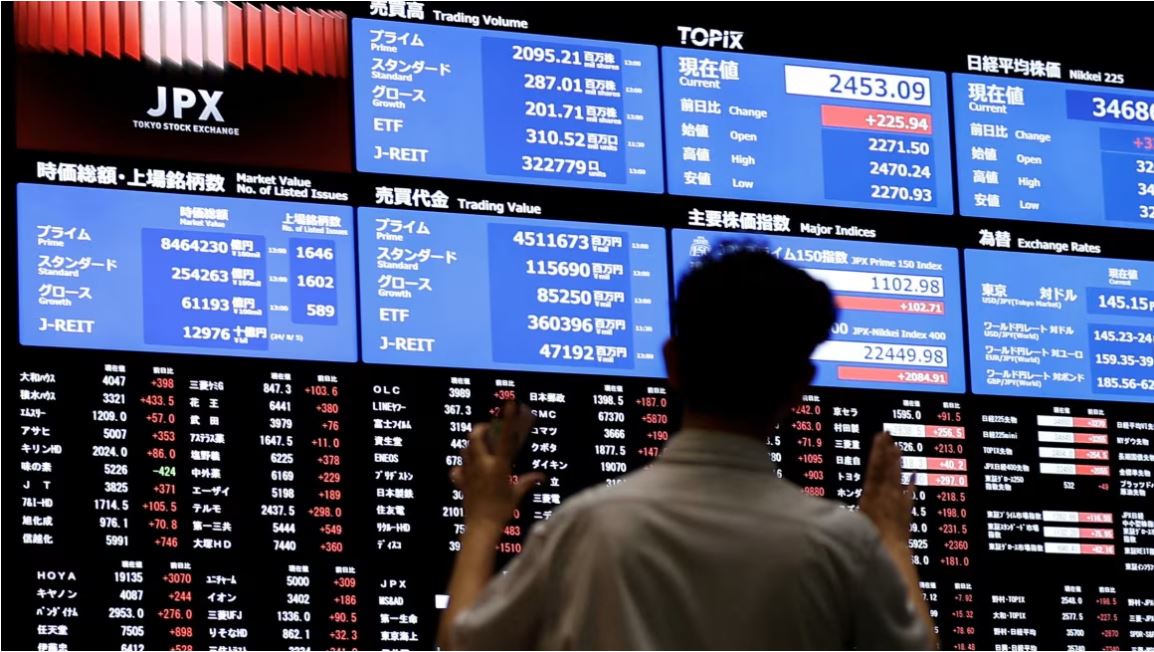
In other places in Asia, Japanese markets were closed due to a public holiday. Nikkei 225 was closed at a record high on Tuesday due to optimism associated with Prime Minister Sanae Takaichi’s election victory.
In South Korea, the KOSPI index also increased by nearly 1% while the Straits Times Index in Singapore rose by 0.2%. Futures for India’s Nifty 50 climbed 0.1% higher.
Read: HubSpot Reports Q4: What to Expect Ahead of Earnings
Less Growth in China CPI
The growth in China’s CPI is less than expected, and PPI also remained in contraction. Investing.com reports that China’s consumer price index increased at a slower pace than anticipated in January. The producer’s price was in deflation, indicating the ongoing pressure on domestic demand.
This data reemphasized the concerns that price weakness could significantly influence corporate profits, despite the recent policy measures taken to encourage growth.
China’s blue chip Shanghai Shenzhen CSI 300 index and Shanghai Composite traded flatly, while Hong Kong’s Hang Seng index increased by 0.3%