
Several Asian equity markets advanced on Friday, driven by gains in technology stocks. In contrast, Japan continued to experience modest market movement due to the Bank of Japan’s (BOJ) announcement that it would be maintaining interest rates unchanged as expected.
Furthermore, the BOJ’s monetary policy committee had revised both its outlooks for inflationary pressure and economic growth upward. Focus will now shift to a speech delivered by BOJ Governor Kazuo Ueda later today. Regional equity markets were positively influenced by U.S. stocks rebounding for the second consecutive day following President Donald Trump’s mellowing rhetoric regarding Greenland.
However, further commenting that a U.S.-led “armada” heading to Iran caused some fear during Asian trading hours, resulting in a new all-time high price for gold. In the futures market, the S&P 500 rose 0.2%, 23:40 ET (04:40 GMT).
Most Asian equity markets continued to be on pace for a poor week overall due to falling prices triggered at the beginning of the week by the President’s bullish statements regarding Greenland. Furthermore, concerns surrounding weakening economic conditions in developed nations continue to restrict gains. South Korea’s KOSPI index experienced the largest general market gains this week due to technology, while India’s Nifty 50 index remained behind.
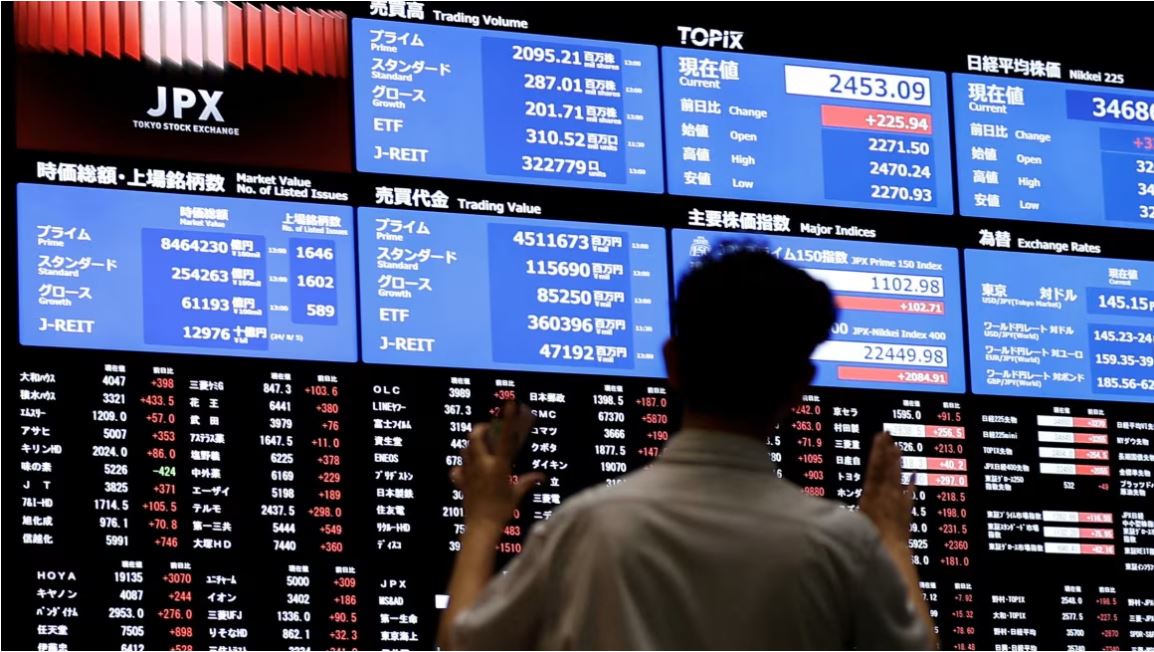
Japanese equity markets were slightly higher following the BOJ’s decision to keep rates unchanged and update their short- and long-term growth and inflation projections. Japan’s Nikkei 225 increased 0.2% while the TOPIX gained 0.4%; both of these averages were pared after the BOJ announcement. The BOJ’s monetary policy committee voted unanimously that the current interest rate remains unchanged at 0.75%, while also increasing its 2025 and 2026 growth and inflation outlook due to increased government spending.
Ueda’s press conference, due later today, is dominating the focus now. The BOJ has said in its latest statement regarding its monetary policy that it will raise interest rates following improved overall economic growth and increasing wages.
However, the BOJ is expected to stay put until (at least) March or April due to the results of spring wage negotiations providing the central bank with additional information about conditions in the economy and wages. Weak inflation results for December (released earlier today) cause some uncertainty about the prospect of an interest rate hike by the BOJ. The headline Consumer Price Index (CPI) inflation rate fell close to its lowest level in four years, whereas core CPI inflation continues to demonstrate resilience (stickiness).
Read: Capital One is buying startup Brex for $5.15 billion
Most Asian equity markets increased on Friday due largely to the strong performance of technology shares, particularly after positive comments regarding artificial intelligence by NVIDIA Corporation (NASDAQ: NVDA) bolstered investor sentiment. Despite all of this, most regional markets have been positioned for a low volume performance this week as results from China produced varied growth results and increased uncertainty over fiscal issues in Japan, and speculation regarding the Greenland situation has created a bearish market environment.
South Korea’s KOSPI Composite Index gained 0.6% and is positioned slightly below a record high, and has demonstrated continued strength in technology and automotive issues. This index was the leading performing regional index this week with a gain of 2.5%. The Shanghai Shenzhen Composite (CSI) 300 Index and the Shanghai Composite Index varied within a relatively narrow trading range, while Hong Kong’s Hang Seng Index gained 0.4%. In the Australian equity market, the ASX 200 gained 0.3% on Friday, and the Straits Times Index of Singapore gained 0.9%.
The Nifty 50 Index in India fell 0.1% in the morning session. The lack of a U.S.-India trade agreement has caused investors to have some doubts about investing in India’s stock market. In addition, weaknesses in corporate earnings throughout the week from several of India’s largest companies continue to negatively impact the stock markets of India.