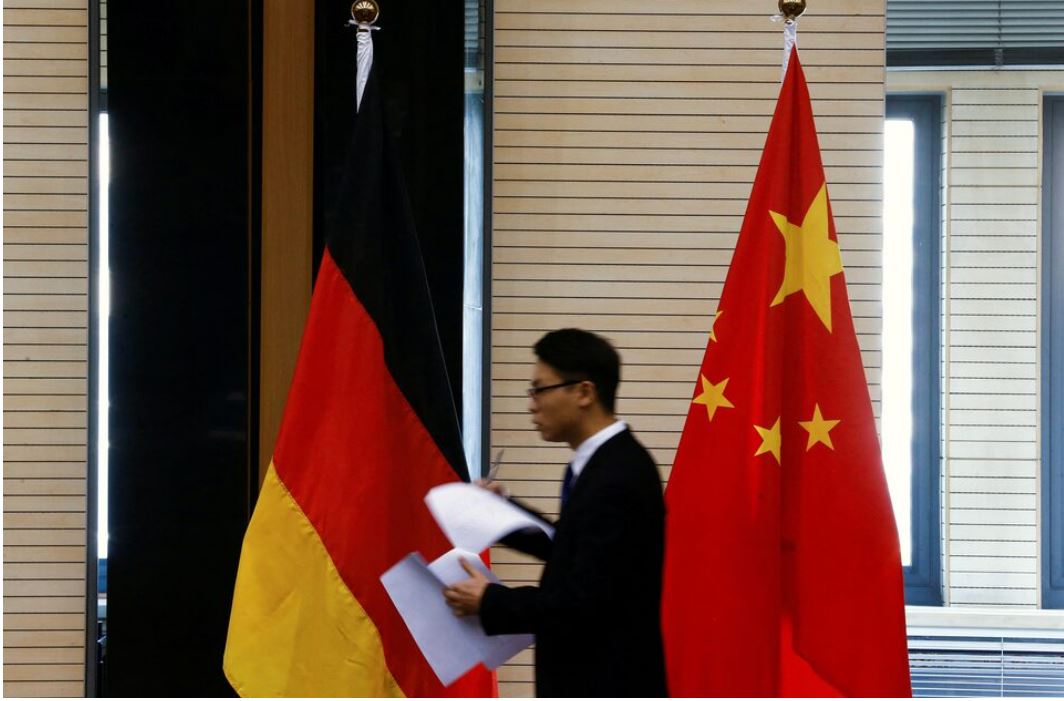
Investments by German firms into China reached their highest ever level in 2025, as reported to Reuters by the IW Institute for Economic Policy in Germany. The institute demonstrated how the Administration of President Donald Trump has compelled companies and governments to seek more productive business relationships outside the United States.
Investments made by German firms in China totaled more than Euro 7 billion (US$8 billion) from January to November 2025. This represents a growth of 55.5% compared to Euro 4.5 billion in 2024 and 2023. These investment growth numbers demonstrate the impact of Trump’s aggressive trade policies on both European firms competing with American imports and on firms operating in Europe that are now attempting to establish business relationships with China, as well as other countries.
At the same time, the Government of Great Britain is sending a delegation to China to negotiate further business opportunities with the Chinese, and as the European Union is near agreeing with the countries of South America, Canada is also looking to expand its trade relationship with both China and India.
Berlin has also attempted to balance its newly enhanced criticism of the actions of China towards the rest of the world regarding both trade and security, while ensuring that the basic partnership with China remains intact. “German companies are continuing to develop and expand their business activities in China at a more rapid rate than ever before,” said Juergen Matthes, Director of International Economic Policy at the IW Institute, “This will result in the strengthening of their supplier base in China.”
Last week, in an exclusive news story, Reuters reported that German businesses reduced their investments in the United States (U.S.) in the first year of newly re-elected United States President Donald Trump’s second term by 50%.
The major driver of the investment cuts, according to Matthes, was that many companies and industries were building out their China business so they would not have to rely on the U.S. for production. As Matthes stated, “The current geopolitical issues are leading many companies to expand their production capabilities in China as a precautionary measure…” Many companies are now taking the approach that they want to remain as insulated as possible from any significant disruptions to trade with the U.S. They have taken a firm stance, i.e., they are producing in China for China.
Read: Bitcoin Consolidates Below $88,500 as Gold Hits $5,000, Silver Retreats
Major German automotive and chemical companies, such as BASF, Volkswagen, Infineon, and Mercedes-Benz, have all invested heavily in China. Last year, ebm-papst, a major manufacturer of fans and motors, invested €30 million in expanding its operation in China, representing over 20% of the company’s total investment. According to ebm-papst’s statement, “This manufacturing strategy has provided a foundation of stability through the tariffs and geopolitical unrest we are experiencing. We are also planning to expand into the U.S. in 2018.”
The total number of investments for 2025 also exceeds the 6 billion euro average investment for the period (2010-2024), according to the Institute for Statistics (IW) report, which is based on data collected from the German Bundesbank.
Last year, China once again returned to the top trading partner for Germany after having lost that title to the U.S. in 2024. A significant factor in this change was the growth in rising imports from China.