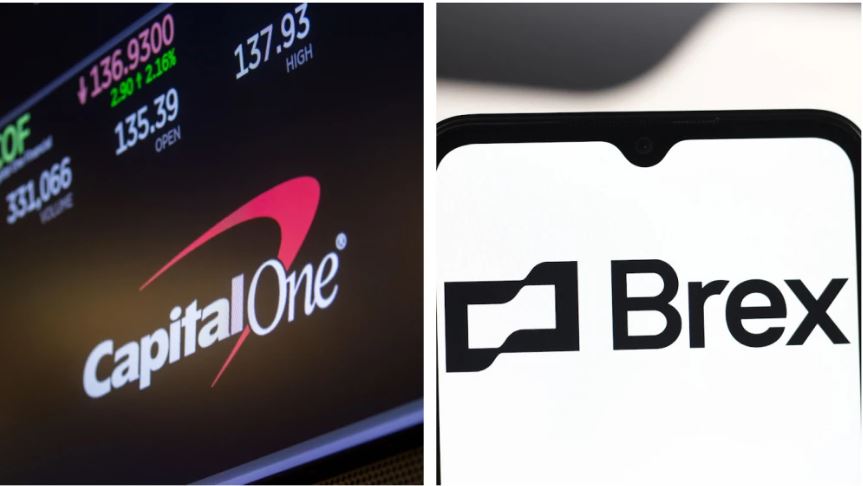
According to a statement released Thursday, Capital One was acquiring Brex, which is a payment start-up, for $5.15 billion. This acquisition is the latest of many by CEO Richard Fairbank of Capital One, who also acquired Discover Financial, a competitor of Capital One, for $35 billion in 2018.
Fairbank stated that Brex was valued at $12.3 billion. Brex’s acquisition was disclosed in Capital One’s earnings report for the fourth quarter of 2018, and the acquisition would consist of 50% cash and 50% stock.
Following the acquisition announcement, Capital One’s shares dropped approximately 3%. Brex was created by Fairbank, Capital One’s founder and the only founder/CEO running a major U.S. bank. Brex developed the first corporate cards, banking, and spend-management software all within the same platform as part of its vertically integrated payment solutions from top to bottom of the technology stack.
Fairbank believes that the acquisition will help accelerate Capital One’s growth strategy in the business payments ecosystem. Brex experienced a decrease of over 50% in its market value from its estimate at the height of the fintech boom in early 2023. Throughout the 2010s, many Fintech companies were able to grow quickly due to low interest rates.
Initially, Brex was known as a start-up that gave loans to businesses through its credit cards. Since expanding into different areas, the company has not only grown its own business model, but now also serves established firms along with start-ups.
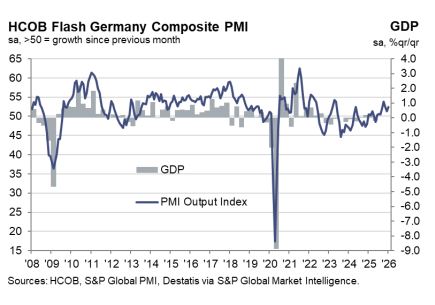
Read: Germany Composite PMI at 3-Month High
Capital One had offered business credit cards for over 20 years, but they realized that Brex’s business model was going to be the best of the available options, according to a source familiar with the lender’s direction.
Brex CEO Pedro Franceschi remarked in an interview that there was no need for them to pursue the acquisition as their growth was so strong on its own. By combining Brex’s technology with Capital One’s reach and resources, they would allow Brex to scale more quickly than it could on its own.